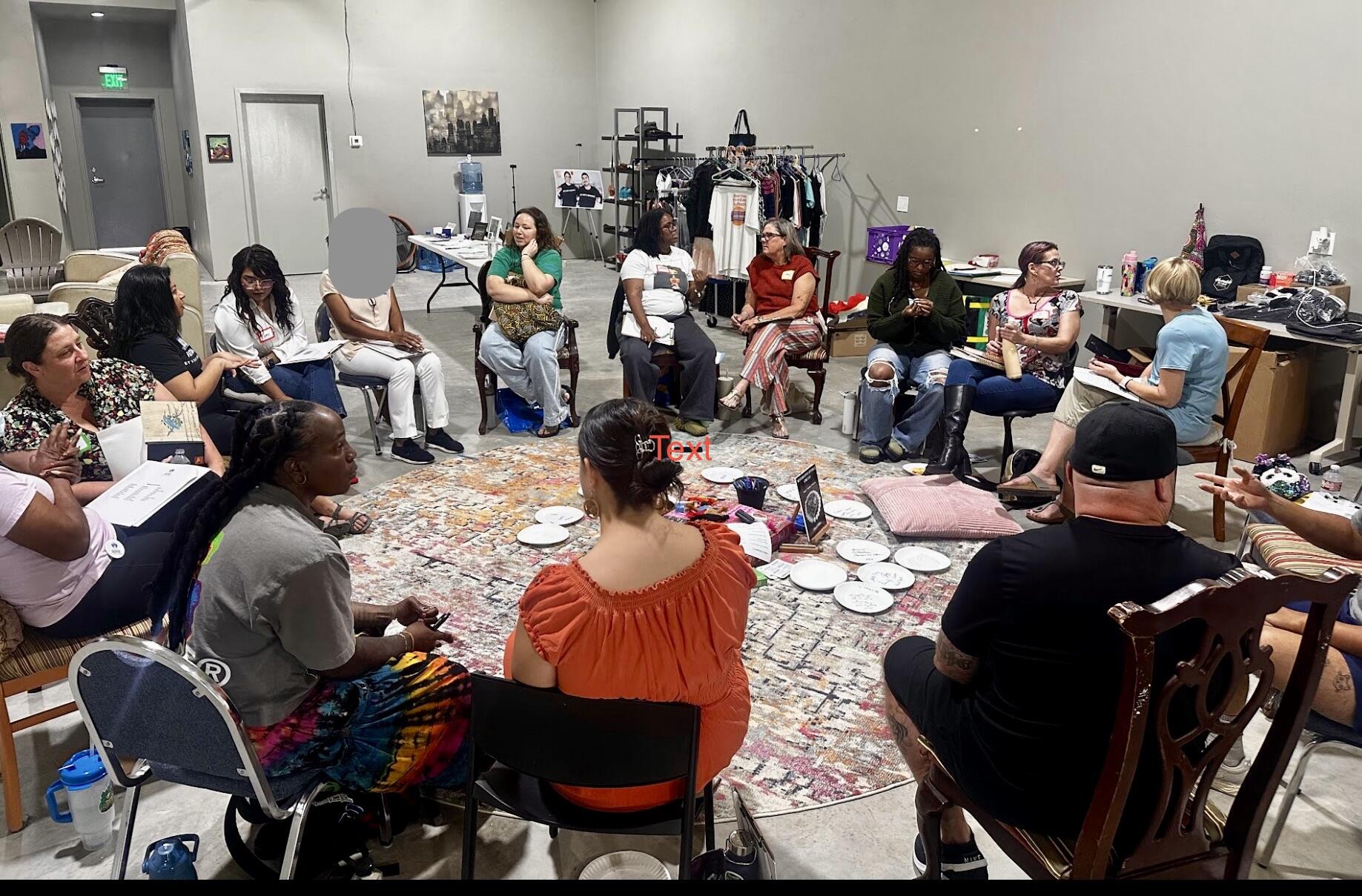
We had a great Apprenticeship Session this weekend!

We read an article that our Executive Director, Dr. Anita Wadhwa wrote in “Colorizing Restorative Justice” called “What do you want, reparations?” and had a discussion around identity & power dynamics as well as racial issues within RJ. If you would like to read the article click HERE
We partnered with Journey HTX to do a circle for their youth aging out of foster care!

Youth board member Amiyah co-kept a beautiful circle on Tuesday, where they discussed adulting and wrote letters to their younger selves. Amiyah’s mother, Deshandrea, who is also an RH apprentice drove 2 hours to volunteer! We are so grateful. Listen to a testimonial from Journey HTX founder, Dr. Vanessa Monroe about the circle on Instagram or TikTok
Congratulations to our latest, fully apprenticed graduate!

Already an experienced Circle keeper, she is now fully apprenticed after having gone through the fall cohort in circles for community building. She led a beautiful training for educators who work with students who are often sent to in school suspension. We set goals, and role played the difficulties that can arise in circle. She’s a true leader in the movement.

UPCOMING EVENTS:


Decolonization Corner
Decolonizing Conflict
Many of us were taught that conflict is something to avoid. We’re told that disagreement means something has gone wrong, that it signals disrespect, or that someone must “win” while someone else “loses.” In many colonial systems, conflict is either suppressed or escalated into punishment, blame, and separation.
But conflict itself is not harm. Conflict is a natural part of being in relationship with other human beings.
In fact, conflict is often a sign that people care enough to engage. When individuals with different experiences, identities, and perspectives come together, disagreement is inevitable. The problem is not conflict—it’s that most of us were never taught how to move through it in healthy ways.
Restorative practices offer a different path. Instead of avoiding conflict or responding with punishment, restorative approaches invite us to slow down and lean into curiosity. We learn to ask questions like: What happened? Who was impacted? What do people need now? What would repair look like?
Decolonizing conflict means shifting our mindset. It means recognizing that disagreement does not have to destroy relationships—it can actually strengthen them when handled with care, accountability, and honesty. When people feel safe enough to speak openly and listen deeply, conflict becomes an opportunity for growth, understanding, and stronger community bonds.
Our ancestors across many cultures understood that conflict was part of collective life. What mattered was not avoiding it, but having practices that allowed people to come back into right relationship with one another.
Restorative Justice helps us rebuild those practices today.
Reflection Prompt:
When conflict arises in your life, were you taught to avoid it, escalate it, or work through it together? What might it look like to approach your next conflict with curiosity instead of fear? Podcast:
🎓 Learning Resources:
🎧 Podcast: All My Relations Podcast
📚 Book: Changing Lenses: Restorative Justice for Our Times — by Howard Zehr
✨ Why Decolonization Belongs in Restorative Justice Work
At Restorative Houston, we understand restorative justice as a decolonial practice. Before courts, prisons, and punishment-based systems, many Indigenous communities addressed harm through relationship, accountability, repair, and collective care.
Colonization disrupted these systems by replacing community-based responses to harm with systems rooted in control, punishment, and separation.
Decolonization, in this sense, is about remembering and restoring ways of being that center healing over harm, relationship over domination, and accountability over punishment.
Decolonization Corner exists to help us unlearn the dominant worldview that shaped modern justice systems and to reconnect with the kinship-based values that restorative justice is grounded in.
Each edition of Decolonization Corner invites readers to explore how decolonial thinking supports restorative justice—both internally and collectively.