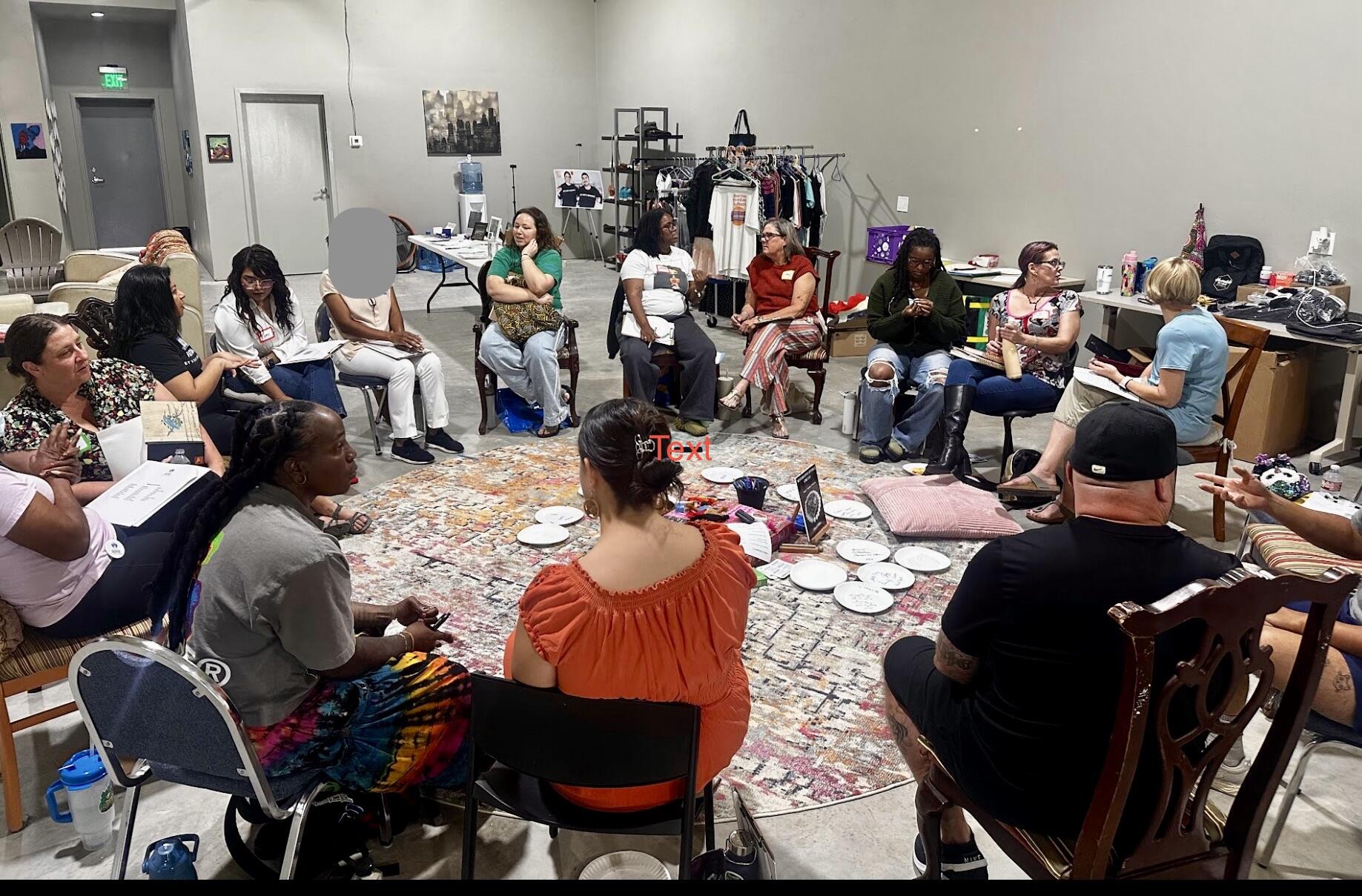
We are having our first ever fully bilingual Spanish/English Community Circle in February! Please see below & spread the word!

Nuestro primer circulo en comunidad en español!

Our youth co-keepers led an incredible youth circle with the Youth Police Advisory Council (YPAC) this past weekend! We are so very proud of them!

Sisterhood Circle fellows Maithreyi Asthagiri and Amiyah Yates led a beautiful session born out of Maithreyi’s desire to connect YPAC to restorative justice circles! Our youth continue to make us proud fulfilling our mission to impact all levels of society with the message of restorative justice & healing.
Many thanks to Kiana Nelson from the Houston Police Department’s Youth Police Advisory Committee (YPAC) and for the youth who showed up for a role play of a healing circle.
Please invite young people you know to attend our next one - every one is different & can be deeply impactful.

On the left is Amiyah Yates (19) and on the right is Maithreyi Asthagiri (16)

WE GOT ANOTHER GRANT!
Decolonization Corner
✨From Overwhelm to Collective Action
Many of us are carrying deep overwhelm, anger, and grief about the state of the world. In a culture shaped by colonization and capitalism, these feelings are often pathologized, dismissed, or redirected into isolation and burnout. But from a decolonized lens, these emotions are not personal failures—they are healthy responses to collective harm.
Our ancestors understood that despair is not something to be endured alone. Feelings were meant to be witnessed, shared, and transformed in community. Decolonization invites us to stop asking, “What’s wrong with me?” and instead ask, “What is this feeling calling me toward?”
Anger can point us toward boundaries and justice. Grief can remind us what we love and want to protect. Overwhelm can signal that we were never meant to carry this alone. When we bring these emotions into circle—into relationship—they become fuel for action rather than paralysis.
At Restorative Houston, we believe community-building is action. Gathering, listening, practicing accountability, and strengthening our capacity for healthy conflict are all ways we interrupt harm and build the world we long for. Decolonization is not just about critique; it’s about reclaiming our innate ability to respond together.
You don’t have to fix everything. Start where you are. Find your people. Build trust. Get educated. Practice repair. That is how movements are sustained—and how hope becomes embodied.
✨ Why Decolonization Belongs in Restorative Justice Work
At Restorative Houston, we understand restorative justice as a decolonial practice. Before courts, prisons, and punishment-based systems, many Indigenous communities addressed harm through relationship, accountability, repair, and collective care.
Colonization disrupted these systems by replacing community-based responses to harm with systems rooted in control, punishment, and separation.
Decolonization, in this sense, is about remembering and restoring ways of being that center healing over harm, relationship over domination, and accountability over punishment.
Decolonization Corner exists to help us unlearn the dominant worldview that shaped modern justice systems and to reconnect with the kinship-based values that restorative justice is grounded in.
Each edition of Decolonization Corner invites readers to explore how decolonial thinking supports restorative justice—both internally and collectively.
🔗 Learning & Resources
🎧 Podcast: Better Future