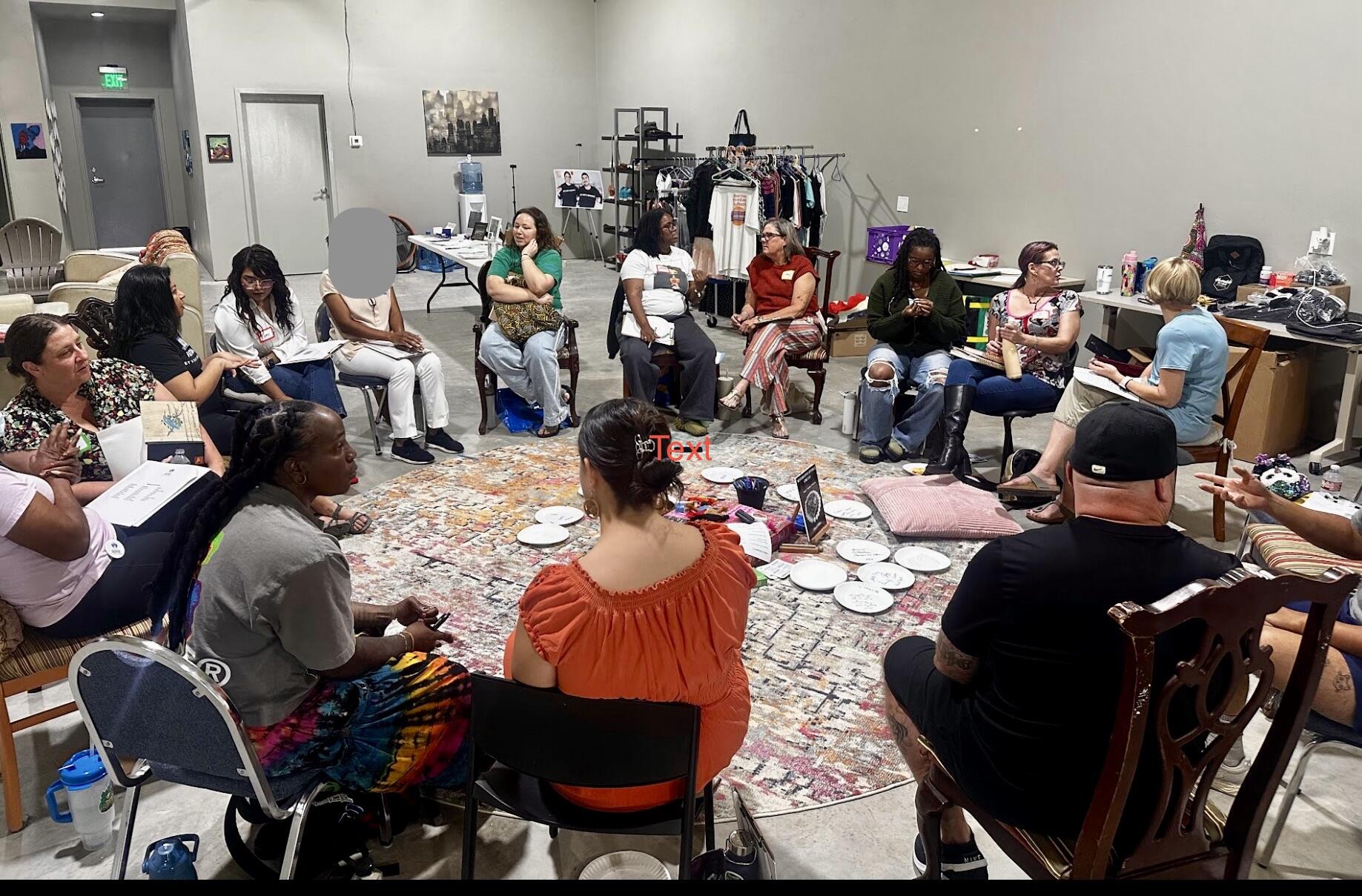
We are having our first ever fully bilingual Spanish/English Community Circle in February! Please see below & spread the word!

Nuestro primer circulo en comunidad en español!

We had our Fall 2025 Cohort Graduation!

From left to right: Cheryl Miller, Abby Parker-Starghill, Perla Moreno, Alissa Minshew, Lisa Williams. The rest not pictured who graduated are: Carletta Griffin, Carnetta Griffin, Jessica Hernandez, Jennifer McCready, James Odom, Esmeralda Rocha, Unique Simmons & Rayla Willis. CONGRATULATIONS TO EVERYONE!


We are so grateful that Myracle chose RH to complete her internship hours for her undergrad degree! We are already feeling her impact on our organization!
MEET OUR NEW SPRING 2026 APPRENTICESHIP COHORT!

The Spring cohort started off with a bang! We are so excited to go on this journey with these amazing humans!
Decolonization Corner
🌱Reclaiming Time, Care, and Collective Responsibility
Colonial and capitalist systems teach us that worth is measured by productivity, speed, and individual achievement. We’re conditioned to rush, compete, and carry everything alone—often at the expense of our relationships, health, and humanity.
Decolonization invites us to remember something older and truer: we were never meant to survive—or heal—alone. Our ancestors organized life around shared responsibility, mutual care, and collective wisdom. Time was relational, not transactional. Rest, ceremony, and community were essential—not optional.
Restorative Justice asks us to slow down and re-center those values. It reminds us that tending to relationships is the work. That pausing to listen is powerful. That repairing harm and caring for one another is how communities stay whole.
This week, we invite you to gently resist the pressure to do more and instead ask:
Who can I lean on?
Who needs my care right now?
How can I show up in ways that strengthen our collective fabric?
Decolonization is not just about dismantling systems—it’s about remembering how to belong to one another again.
✨ Why Decolonization Belongs in Restorative Justice Work
At Restorative Houston, we understand restorative justice as a decolonial practice. Before courts, prisons, and punishment-based systems, many Indigenous communities addressed harm through relationship, accountability, repair, and collective care.
Colonization disrupted these systems by replacing community-based responses to harm with systems rooted in control, punishment, and separation.
Decolonization, in this sense, is about remembering and restoring ways of being that center healing over harm, relationship over domination, and accountability over punishment.
Decolonization Corner exists to help us unlearn the dominant worldview that shaped modern justice systems and to reconnect with the kinship-based values that restorative justice is grounded in.
Each edition of Decolonization Corner invites readers to explore how decolonial thinking supports restorative justice—both internally and collectively.
🔗 Learning & Resources
🎧 Podcast: Decolonize your Mind